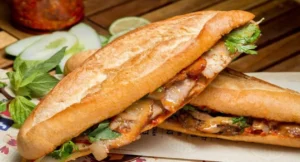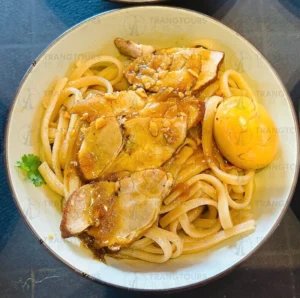
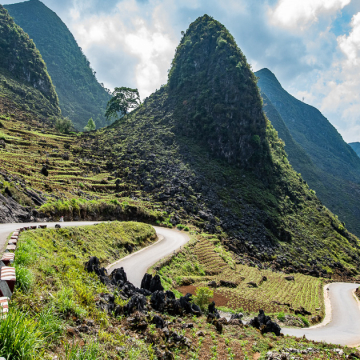
Some dishes achieve such global fame that they become ambassadors for an entire nation. Vietnamese street food such as pho, banh mi, banh xeo, and banh cuon is now enjoyed across the globe, and the story of these travelling dishes pleasing the world is as remarkable as their flavours. Every region of Vietnam invents its own specialties, and these dishes can wow people worldwide through their appearance, taste, and even their origins. They act as ambassadors introducing the region. Specifically, the cuisine of Ha Giang karst plateau reveals just how unique this land truly is.
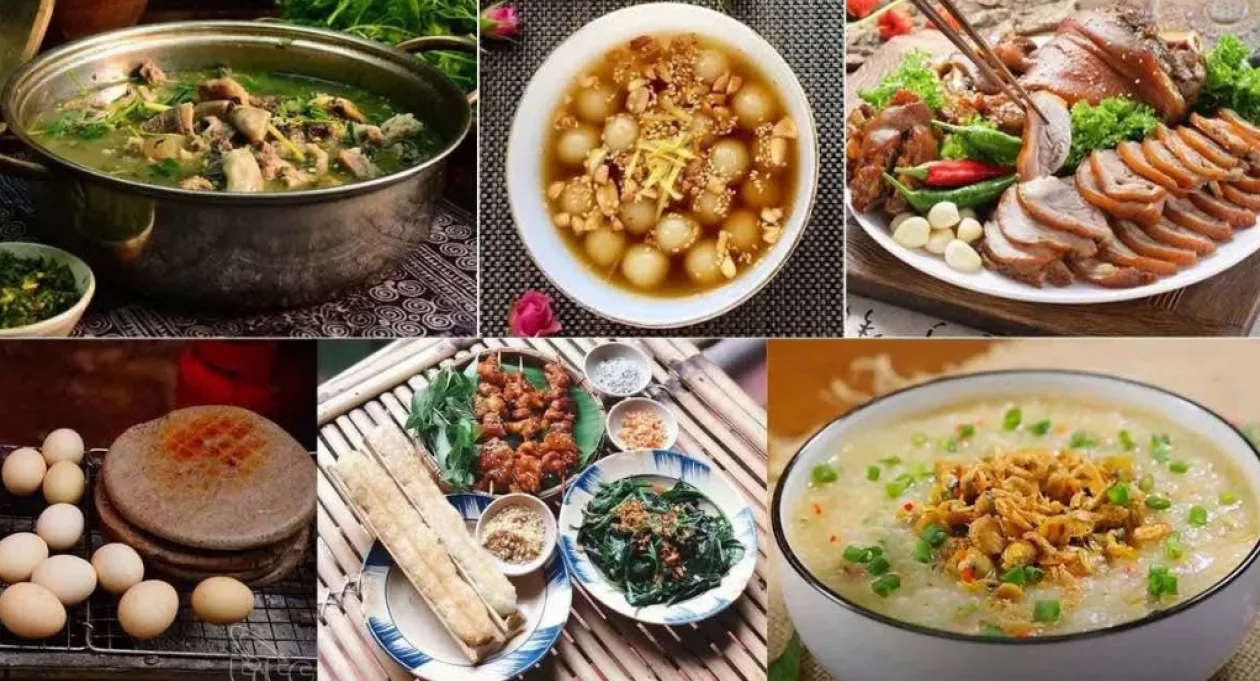
Ha Giang is not only famous for its majestic and charming mountainous landscape, golden terraced fields during the ripe rice season, romantic buckwheat flower fields blazing with bright pink colours, or its unique traditional cultural identity. It is also a convergence of diverse and rich culinary elites with specialties. Dishes such as five-colour sticky rice, buckwheat cakes, leaf-fermented corn wine, grilled stone moss, hunchback chung cake, sausages, and thang co are culinary quintessence originating from the living and working process of the community of 19 ethnic groups here. These groups have many traditional dishes, with characteristic nuances of each ethnic group and unique processing ingredients gifted by nature to the northern mountainous region of the country, such as mac khen (zanthoxylum rhetsa), doi seeds, star anise, cardamom, and honey.
Au Tau Porridge: A Winter Warmth from Ha Giang
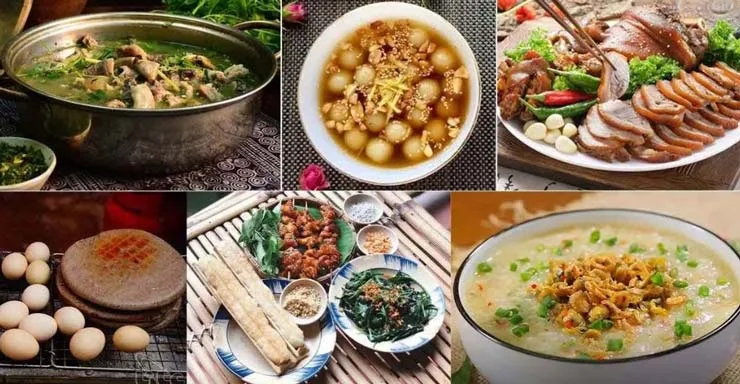
The bowl of porridge has a fatty taste mixed with a bit of bitterness from au tau, a delicious smell from chicken eggs, and accompanying herbs. Au tau is a typical tuber of Ha Giang. The Mong people soak au tau in rice water, then simmer them for about four to five hours. Then they puree the tubers, cook them with bone broth and yellow flower sticky rice mixed with a little regular sticky rice. When the porridge is cooked, it is scooped into a bowl and eaten with minced lean meat, salt, pepper, and scallions. Au Tau is a nutritious dish that cures colds and aches. During cold winter days in the rocky mountains, enjoying a bowl of hot, nutritious Au Tau porridge is definitely an unforgettable experience.
Thang Co: The Traditional Mong Meat Soup
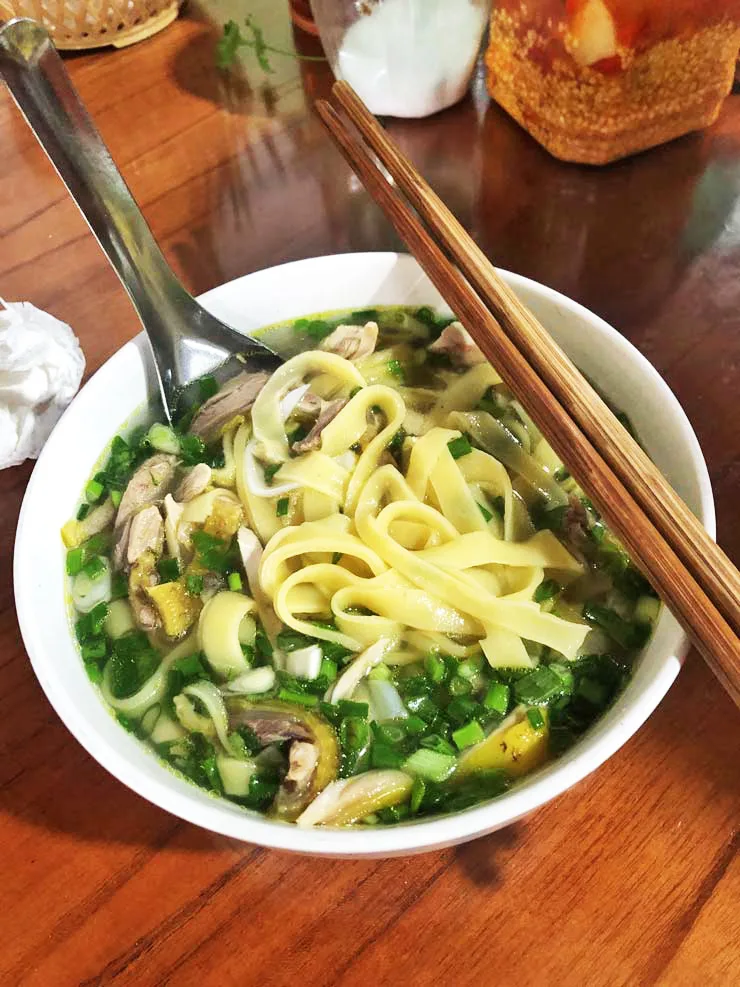
Thang Co means meat soup, a traditional dish of the Mong people, made from horse meat with a very unique flavour. Nowadays, to suit tourists, restaurant owners have replaced the ingredients with buffalo, cow, and pork meat. The essence of Thang Co is in the broth, simmered from bones and organs and mixed with 12 typical spices such as star anise, cardamom, and lemon leaves, creating a fragrant pot of broth. The meat is lightly fried and then placed in broth to simmer until soft. It is often eaten with Men Men, grilled corn cakes, and corn wine.
Five-Colour Sticky Rice: A Symbol of Harmony
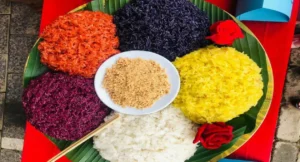
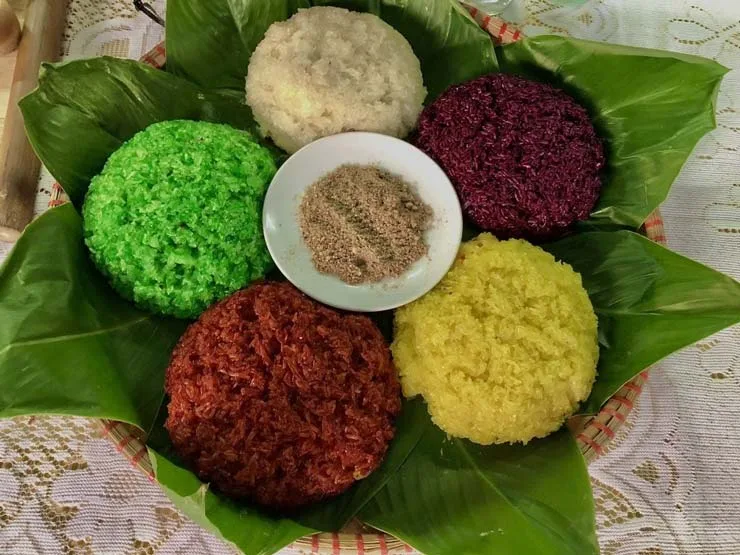
This dish appears in mostly all ethnic minorities in the mountainous regions of Northern Vietnam. In a nutshell, the thing that creates the colour of the rice is not chemical substance but natural leaves. The five colours of the dish represent the five elements of life in Vietnamese belief: yellow is earth, green is plant, red is fire, white is metal, and black is water. People believe that the existence of these five elements creates the well-being of heaven, the earth, and humans.


Buckwheat Cake: A Taste of Ha Giang’s Iconic Flower
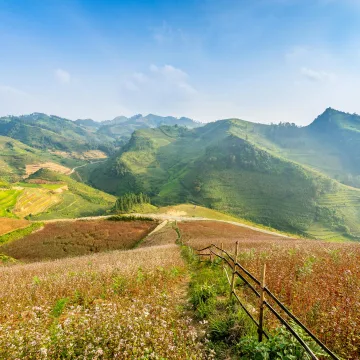
The tiny seeds are crushed into fine powder and then mixed with water, poured into a soft mould, and rolled into bread. Simple but special, the taste will not be confused with any other cake. Visitors to Ha Giang to experience the buckwheat flower paradise should not miss the opportunity to enjoy specialties made from buckwheat seeds that are delicious, unique, and popular, such as all kinds of cakes, pho, beer, noodles, dry rice vermicelli, and wine. Buckwheat is a flowering herb with many colours of white, pink, purple, and red, and has long been famous as one of the symbolic flowers of Ha Giang.
Hunchback Chung Cake: A Red Dao Specialty
Hunchback chung cake is known as a famous dish of the Red Dao people in particular and the Ha Giang region in general. The cake contains upland sticky rice, small green beans, black pork raised mainly by local people, and galangal leaves to wrap. Hunchback chung cake is boiled for about eight to ten hours. Local people boil cakes using traditional wood stoves.
On the journey to explore the karst plateau, visitors can also enjoy other wonderful dishes such as Dong Van steamed rice rolls, Dong Van egg steamed rice rolls, Bac Me bamboo-tube rice, dried buffalo meat, sour pho, corn pho, and thang den (stuffed sticky rice balls).
Read More
To delve deeper into the wonders of Ha Giang, explore these related articles. The Buckwheat Bounty of Ha Giang offers a closer look at the region’s iconic flower and its culinary uses. Roadside adventures in Ha Giang provides practical tips for travellers. The Ha Giang loop: a four-day road trip is an essential guide for those planning to experience the karst plateau’s breathtaking landscapes and local culture.