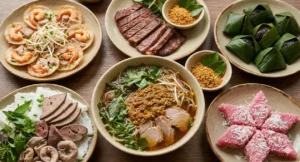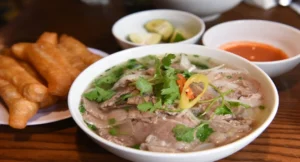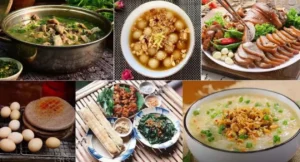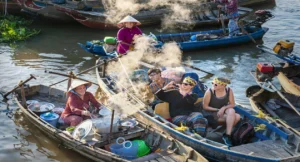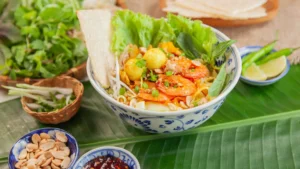
Cao Lau Hoi An is more than just a local specialty; it is an irreplaceable culinary icon that defines the cultural heritage of Hoi An Ancient Town in Central Vietnam. Unlike ubiquitous dishes like Pho or Mi Quang, true Cao Lau cannot be authentically replicated outside of Hoi An due to its exclusive local ingredients and centuries-old culinary secrets.
The Three Sacred Secrets of Authentic Cao Lau Noodles
The distinct texture, smoky aroma, and amber color of authentic Cao Lau noodles rely on three strict culinary traditions:
-
Ash Lye Water from the Cham Islands: The selected local rice is soaked in lye water processed from the ashes of native medicinal plants gathered on the nearby Cham Islands (Cù Lao Chàm). This gives the noodles their signature pale golden hue and firm, springy texture.
-
Pure Water from the Ancient Ba Le Well: Dough kneading requires mineral-rich water drawn directly from Hoi An’s historic 10th-century Ba Le Well. The unique mineral profile lends the noodles their signature chewiness (dai giòn) without turning soggy.
-
Multi-Stage Steaming Method: Instead of streaming rice batter into sheets like Pho, artisans roll the kneaded dough thin, steam the entire sheet over boiling water, and then hand-cut it into thick, rectangular strands.
Historic Origins: A Fusion of Merchant Port Cultures
During the 17th century, under the open-trade policies of the Nguyen Lords, the bustling port of Faifo (now Hoi An) welcomed merchants from China, Japan, and Europe. Cao Lau emerged during this golden age of trade:
-
Name Origin: “Cao Lầu” translates literally to “high floor” or “upper level.” Affluent merchants traditionally sat on the upper balconies of trading shophouses to dine while keeping watch over their goods below.
-
Cross-Cultural Flavor: While the thick noodles echo Japanese udon and the savory pork resembles Chinese char siu, the spice blend and herb pairing create a flavor profile that belongs strictly to Hoi An.
Anatomy of a Perfect Bowl of Cao Lau


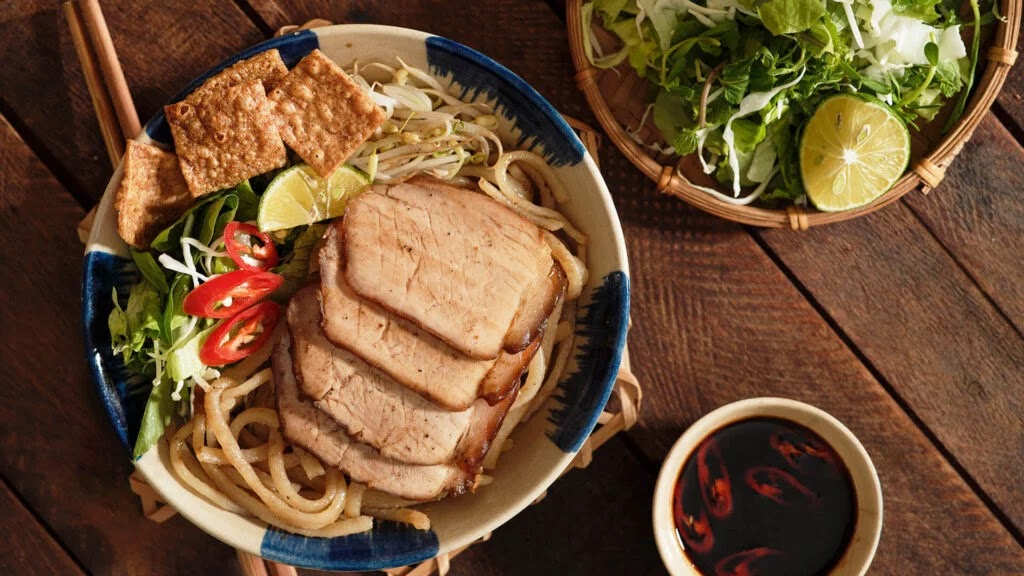
A finished bowl of Cao Lau is an intricate assembly of distinct textures, contrasting flavors, and rich colors:
-
Tender Char Siu Pork: Premium lean pork is marinated in five-spice powder, garlic, and fish sauce, braised over low heat, and reduced with shallots and tomatoes into an intense, glossy sauce.
-
Crispy Noodle Cracklings (Tép): Offcut squares of dried noodle dough are fried until golden and crisp, replacing traditional pork rinds with a satisfying, clean crunch.
-
A Concentrated Glaze: Cao Lau is served without soupy broth. Instead, the chef adds two to three spoonfuls of concentrated braising gravy to coat the base noodles.
-
Sesame Rice Crackers (Bánh Tráng Nướng): Thick, toasted Central Vietnamese rice crackers laden with white sesame seeds provide an extra crunch.
The Essential Herbs of Tra Que Village
A bowl of Cao Lau is complete only when paired with fresh local greens, traditionally harvested from Hoi An’s nearby Tra Que Herb Village. While up to 12 varieties of herbs can be included, three are considered essential:
-
Chrysanthemum Greens (Tần Ô)
-
Bitter Herbs (Rau Đắng)
-
Sweet Thai Basil (Húng Quế)
Other supporting herbs include fish mint, young mustard greens, bean sprouts, sour starfruit, and sliced banana blossoms to cut through the richness of the pork.
How to Savor Cao Lau Like a Local
To experience the full depth of the dish, mix all the ingredients thoroughly from the bottom up so the dense noodles absorb the concentrated pork sauce. Break a piece of sesame rice cracker over the bowl, add a touch of local roasted chili jam, and take in the harmonious blend of tender pork, springy noodles, fragrant herbs, and satisfying crunch.
Frequently Asked Questions (FAQs)
-
What makes Cao Lau different from Mi Quang?Cao Lau uses thick, lye-treated, and steamed wheat/rice noodles with a chewier texture and is served with savory char siu pork, whereas Mi Quang features soft, turmeric-infused flat rice noodles served with a wider variety of broths (shrimp, pork, chicken, or frog).
-
Can authentic Cao Lau be made outside Hoi An?Culinary historians and chefs agree that authentic Cao Lau requires the mineral content of Ba Le Well water and ash from Cham Island wood, making true preparation unique to the Hoi An region.
-
Is Cao Lau a soup dish?No. Cao Lau is served dry with only a small ladle of concentrated, intensely savory braising reduction at the base.