Five-colour sticky rice, known in Vietnamese as xôi ngũ sắc, is more than a colourful dish. It is deeply rooted in the beliefs and customs of the ethnic groups in Vietnam’s northern mountainous regions. The term “ngũ sắc” refers to the five colours of the sticky rice, which symbolise the five elements: metal, wood, water, fire, and earth. Together, they reflect the harmony of the universe and a desire for a balanced and peaceful life.
What Is Xôi Ngũ Sắc?
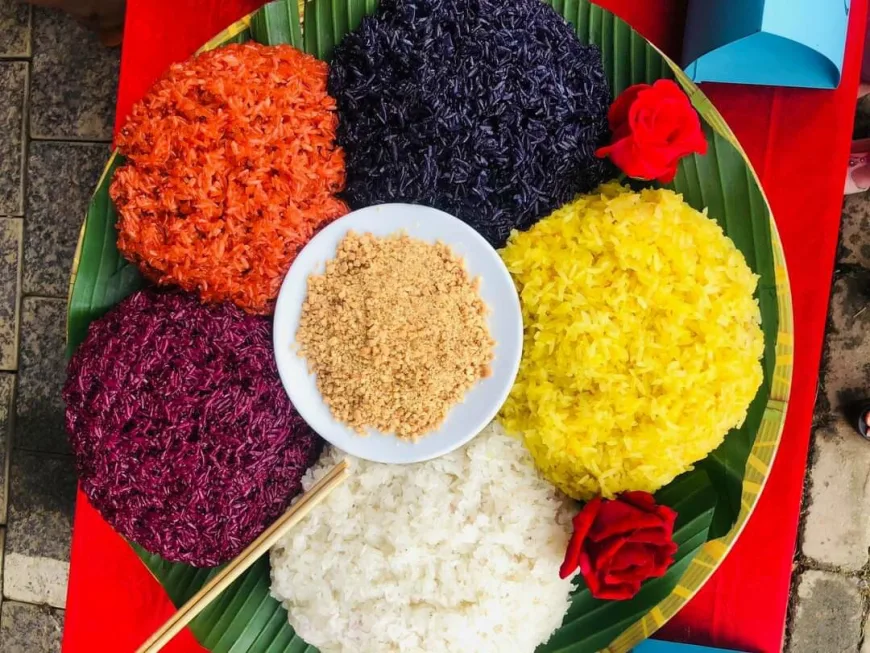
Xôi ngũ sắc is a traditional Vietnamese sticky rice dish made from glutinous rice and natural colourings. It is often prepared for festivals, weddings, Tet celebrations, and community gatherings. Among the ethnic groups of northern Vietnam, the dish is also used as an offering, expressing respect, gratitude, and wishes for good fortune.
Each colour is carefully created, usually from natural ingredients such as leaves, roots, flowers, or seeds. The rice is then soaked, steamed, and arranged to display all five colours together.
The Five Colours and Their Meanings
Every colour in five-colour sticky rice carries its own significance.
-
Red represents good fortune, positive energy, and strength.
-
Yellow symbolizes wealth, prosperity, and abundance.
-
Green signifies freshness, hope, and life.
-
Purple stands for loyalty, affection, and gratitude.
-
White embodies purity, clarity, and new beginnings.


Together, these colours create a visual and spiritual balance that reflects the Vietnamese philosophy of harmony between people, nature, and the universe.
A Dish Rooted in Ethnic Culture
In the northern mountainous regions of Vietnam, xôi ngũ sắc is closely connected to the customs of local ethnic communities. It is not only food but also a symbol of identity, celebration, and prayer. The five colours represent the five elements, and the dish itself becomes a wish for a balanced and peaceful life.
For many families, preparing the dish is a communal activity. The process can take time, but it is also a way to pass down traditions from one generation to the next.
How Five-Colour Sticky Rice Is Made
Although recipes vary between ethnic groups, the basic process is similar. Glutinous rice is soaked and then coloured using natural ingredients. The rice is steamed until soft and fragrant, then arranged into a beautiful five-colour presentation.
Some versions are served plain, while others are enjoyed with grilled meat, eggs, or other savoury accompaniments. The result is a dish that is both visually striking and culturally meaningful.
Where to Try Five-Colour Sticky Rice in Vietnam
Travellers can find xôi ngũ sắc in many northern provinces, including Ha Giang, Lao Cai, Cao Bang, Son La, and Dien Bien. It is commonly sold at local markets, festivals, and homestays. Trying this dish is a wonderful way to experience the food culture of Vietnam’s ethnic minorities.
Why Five-Colour Sticky Rice Is More Than Food
Five-colour sticky rice is a symbol of harmony, balance, and cultural pride. Its colours tell a story of the five elements, while its taste connects people to the land and to one another. Whether served at a family gathering or enjoyed by travellers, it carries a message of peace, prosperity, and gratitude.
Five-colour sticky rice (xôi ngũ sắc) is a beautiful reflection of Vietnam’s northern ethnic cultures. With its five symbolic colours and deep connection to the five elements, it represents harmony, balance, and the hope for a peaceful life. For anyone exploring Vietnamese cuisine, this dish is not just a treat for the eyes and taste buds—it is a taste of cultural heritage.