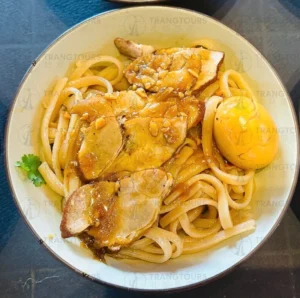
Mi Quang (literally Quang-style Noodles) is the definitive culinary symbol of Quang Nam province and Da Nang City. More than a daily staple, this vibrant dish anchors family gatherings, village festivals, and ancestral ceremonies across Central Vietnam. With its distinctive shallow broth, toothsome noodles, and mountainous bed of fresh greens, Mi Quang offers a sensory feast unlike any other Vietnamese noodle dish.
What Sets Mi Quang Apart?
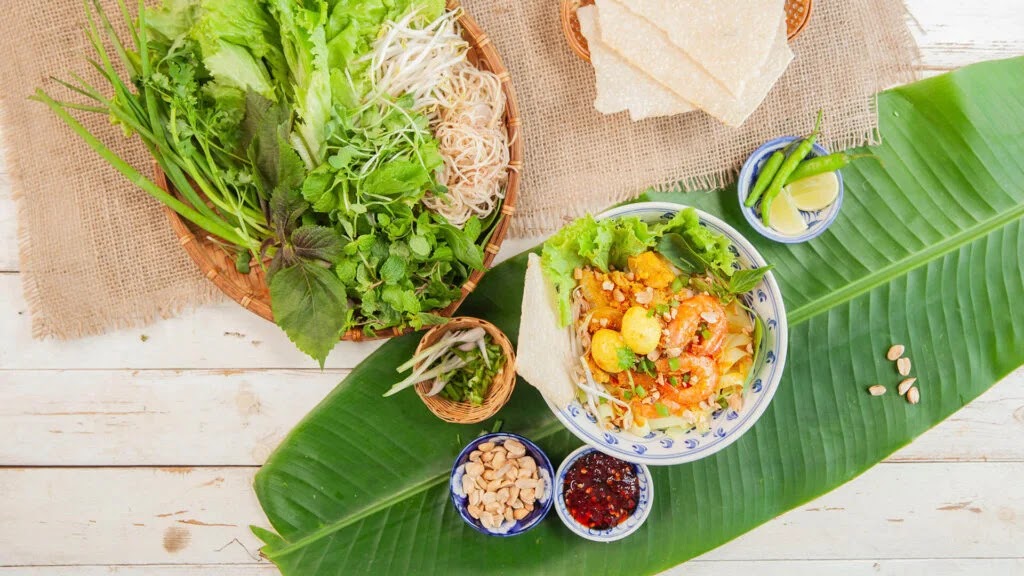
While Pho and Bun Bo Hue rely on deeply filled, piping-hot bowls of soup, Mi Quang is defined by three unique characteristics:
-
Shallow, Concentrated Broth: The broth is simmered into an intensely flavorful, glistening reduction. Only a small ladle—just enough to wet the noodles and coat the herbs—is poured into each bowl.
-
Hand-Cut Rice Noodles: Ground from high-quality rice flour, the flat, broad noodles are steamed in thin sheets, brushed with peanut oil infused with fried củ nén (native small alliums), and hand-cut into thick ribbons. Noodles range in color from classic ivory white to golden yellow from natural garden turmeric.
-
A Feast of Textures: Every bowl balances silky noodles, tender braised meats, crunchy roasted peanuts, and crisp sesame rice crackers.
Anatomy of an Authentic Bowl of Mi Quang
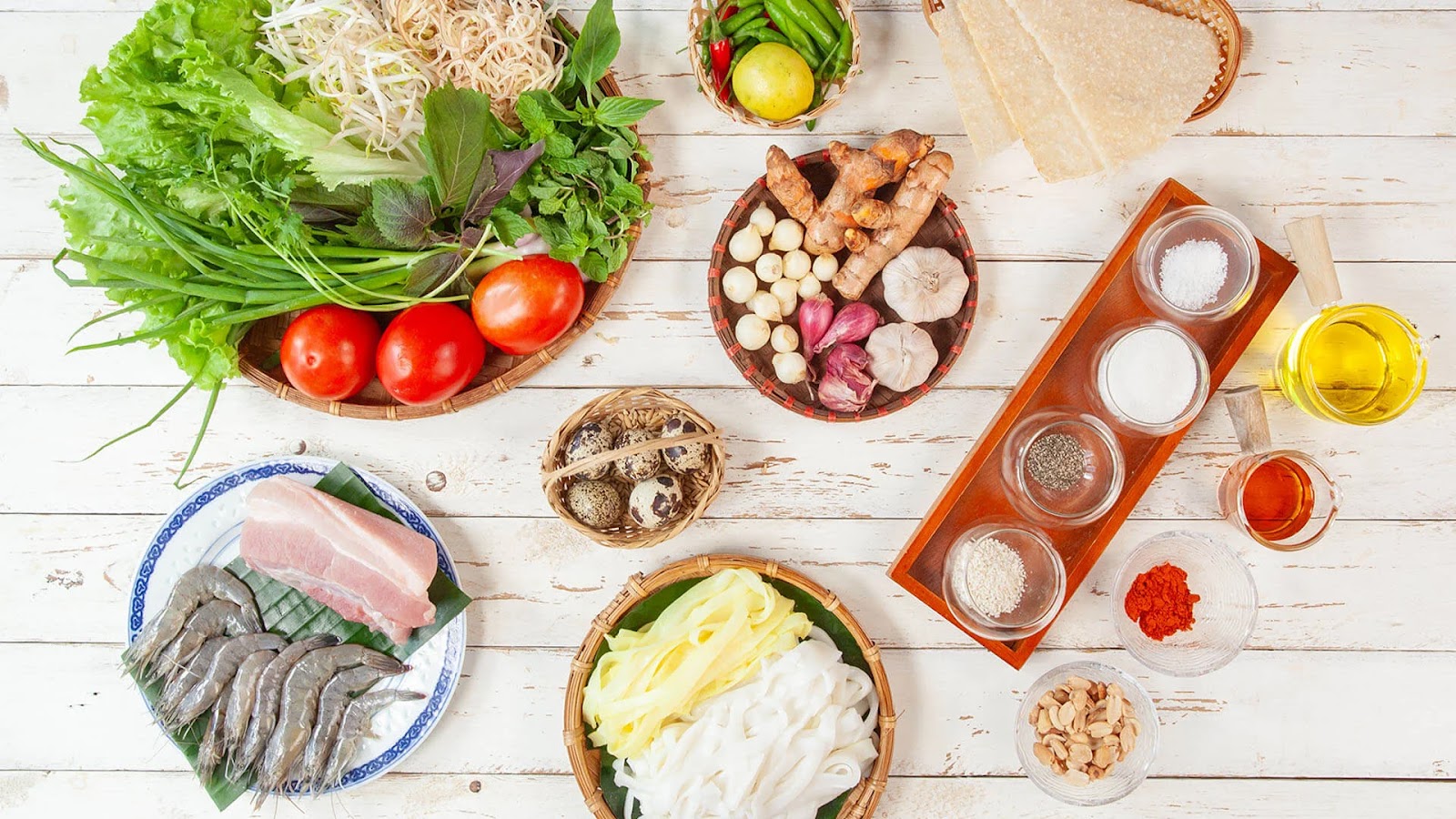


A classic serving brings together meticulously prepared regional ingredients:
-
The Protein Toppings: Braised pork belly, simmered river shrimp with heads and shells intact for umami depth, free-range native chicken (gà ta), braised snakehead fish, beef, or even frog.
-
The Aromatic Broth (Nước Nhân): Stewed from meat bones, crushed annatto seed oil, shallots, and fresh turmeric, creating a fragrant, rich glaze.
-
The Crispy Garnish: Toasted Central Vietnamese rice crackers (bánh tráng mè nướng) and roughly crushed golden roasted peanuts.
-
Fresh Herbs & Greens (Rau Sống): A generous bed of fresh greens filling up to half the bowl, including finely shredded banana blossoms, water mint, basil, Vietnamese coriander (rau răm), crunchy bean sprouts, and baby mustard greens.
How to Savor Mi Quang Like a Local
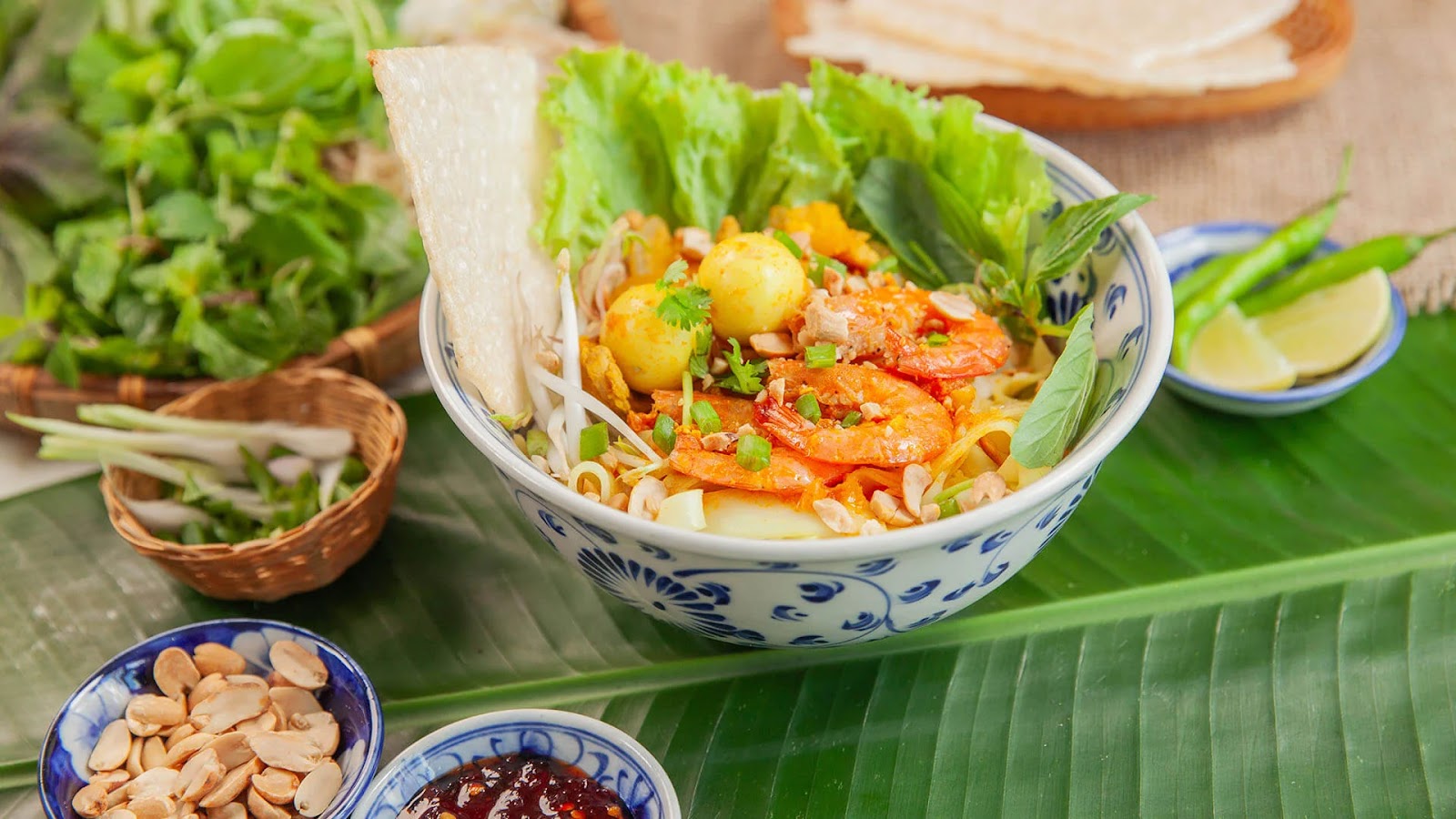
Eating Mi Quang is an interactive ritual that engages sight, sound, and taste:
-
1. Mix Thoroughly: Before your first bite, use your chopsticks to turn the bowl from bottom to top so the shallow broth coats the raw greens and noodles evenly.
-
2. Add the Crunch: Break pieces of crispy sesame rice cracker directly into the bowl, or keep a wedge in your hand to bite alongside the noodles for a satisfying crunch.
-
3. Dial Up the Heat: Add a spoonful of sweet-and-savory Central Vietnamese chili jam (ớt rim) or take a direct bite from a fresh green bird’s eye chili.
-
4. Finish with Lime: A quick squeeze of fresh lime juice cuts through the rich, savory broth and elevates the herbaceous greens.
Frequently Asked Questions (FAQs)
-
Why is there so little broth in Mi Quang?Mi Quang is traditionally served semi-dry. The concentrated stock acts like a rich sauce rather than a traditional soup broth, ensuring the herbs remain crisp and the noodles retain their chew.
-
What is the difference between Mi Quang and Cao Lau?Cao Lau uses thick, lye-water-soaked, steamed noodles topped exclusively with char siu pork, whereas Mi Quang uses soft flat rice noodles served with a variety of braised proteins (shrimp, pork, chicken, fish) and a wider mix of fresh greens.
-
Is Mi Quang eaten for breakfast, lunch, or dinner?Locals in Da Nang and Quang Nam enjoy Mi Quang at any hour—as an energizing breakfast, a quick midday meal, or an informal dinner.