Once one of Southeast Asia’s most prosperous international trading ports from the 16th to the 19th century, the UNESCO-listed ancient town of Hoi An was not only a bustling commercial hub but also home to prominent Chinese merchant communities. To maintain ties with their ancestral homelands, practice spiritual traditions, and support fellow compatriots in trade, they erected ornate, grand meeting places known as Assembly Halls (Hội Quán).
Today, the 5 ancient assembly halls in Hoi An stand as timeless heritage monuments, captivating global travelers with their intricate craftsmanship, vibrant mythology, and serene spiritual atmosphere.
Quick Comparison: 5 Assembly Halls in Hoi An
| Assembly Hall | Address | Built In | Primary Deity | Key Architectural Highlight |
| Fujian (Phúc Kiến) | 46 Tran Phu St | ~1690 | Thien Hau Holy Mother (Mazu) | Grand triple-arched gate, giant incense coils |
| Cantonese (Quảng Đông) | 176 Tran Phu St | 1885 | Guan Yu (Quan Cong) | Ceramic dragon fountain, granite & timber frame |
| Chaozhou (Triều Châu) | 157 Tran Phu St | 1845 | General Fubo (Phuc Ba) | Masterpiece woodcarvings, high-relief artwork |
| Hainan (Hải Nam) | 10 Tran Phu St | 1875 | 108 Merchant Martyrs | Gilded altars, peaceful courtyard, tragic history |
| All-Chinese (Trung Hoa / Ngũ Bang) | 64 Tran Phu St | 1741 | Thien Hau Holy Mother | Unique royal blue walls, joint community center |
1. Fujian Assembly Hall (Hội Quán Phúc Kiến) – The Grandest & Most Visited
-
Address: 46 Tran Phu Street, Hoi An
-
Established: Circa 1690 (Major reconstruction in 1757)
Founded by six prominent merchant families from Fujian province, the Fujian Assembly Hall (also known as Kim Son Pagoda) is the largest and most magnificent assembly hall in Hoi An.
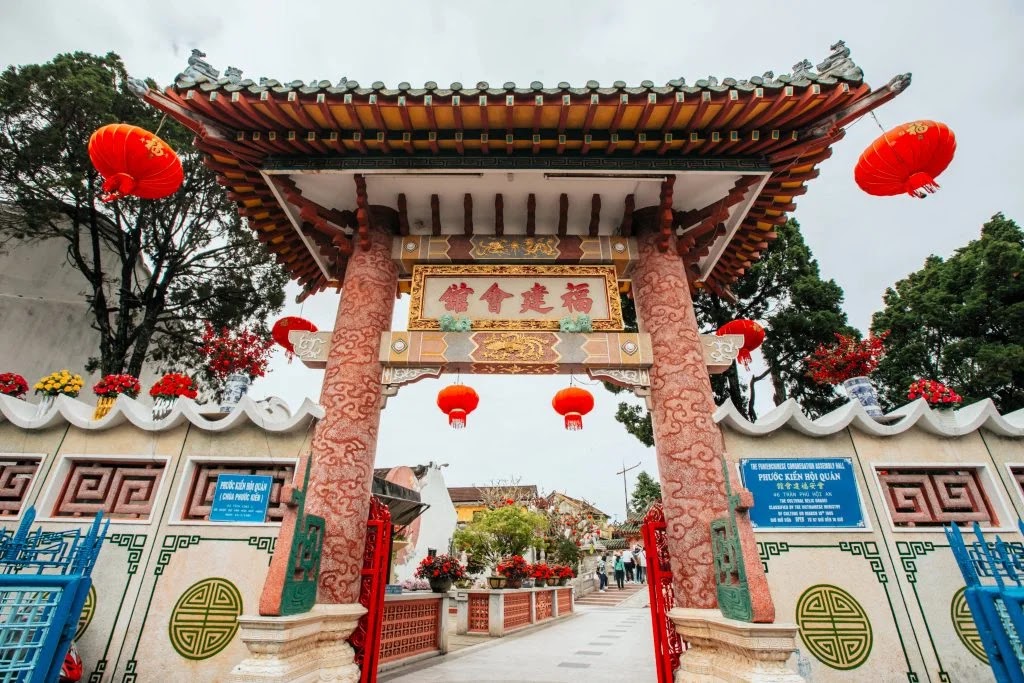
Highlights:
-
The Iconic Triple-Arched Gate (Tam Quan): Adorned with deep pink brick, curved green-glazed yin-yang roof tiles, delicate ceramic dragon mosaics, and classic Sino-Vietnamese calligraphy plaques.
-
Worship of Mazu (Thien Hau Holy Mother): The main sanctuary honors Mazu, the Goddess of the Sea who safeguards sailors and sea merchants. She is flanked by her guardians: Thien Ly Nhan (Clairvoyant / Thousand-Mile Eye) and Thuan Phong Nhi (Clairaudient / Wind-Accompanying Ear).
-
Spiral Incense Coils (Nhang Vòng): Visitors can purchase large hanging incense coils, write prayers and family names on yellow paper tags, and suspend them from the ceiling for peace and prosperity.
2. Cantonese Assembly Hall (Hội Quán Quảng Đông) – Elaborate Stonework & Dragon Art
-
Address: 176 Tran Phu Street, Hoi An
-
Established: 1885
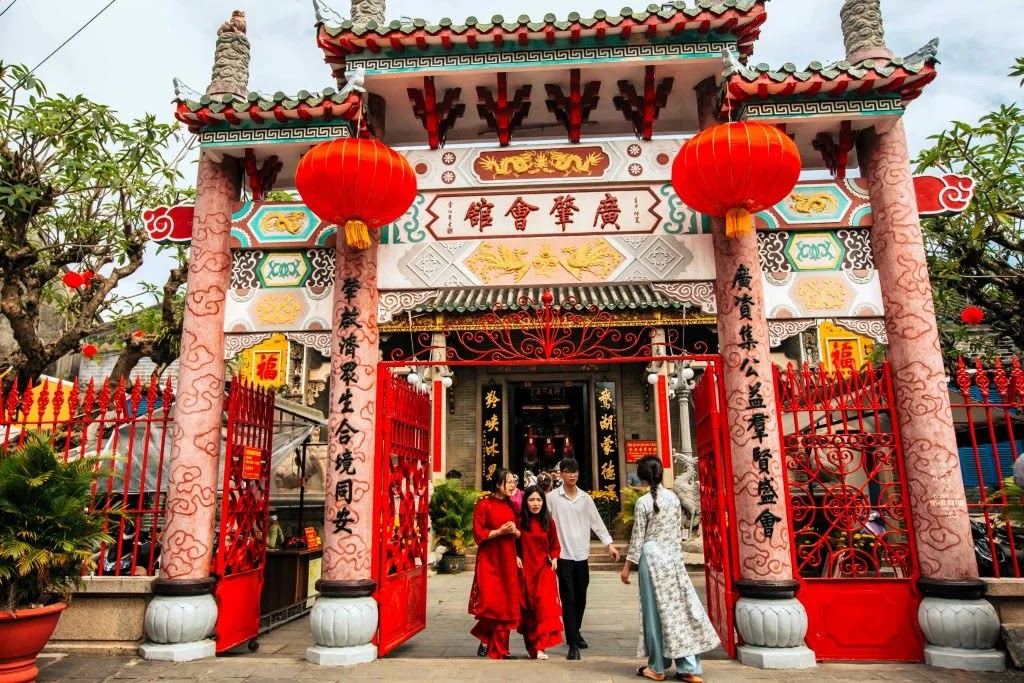
Located right next to the iconic Japanese Covered Bridge (Chùa Cầu), the Cantonese Assembly Hall (also called Quang Trieu Assembly Hall) embodies the distinct architectural traditions of Lingnan (Guangdong), seamlessly blending heavy granite pillars, exquisite woodwork, and colorful porcelain mosaics.
Highlights:
-
The Ceramic Dragon Fountain: The central courtyard features a stunning dragon sculpture assembled from thousands of glossy porcelain shards emerging from a carp-inhabited pool, symbolizing resilience and transformation.
-
Veneration of General Guan Yu (Quan Cong): Dedicated to Guan Yu, a legendary general revered for his unyielding loyalty, integrity, and righteousness—core virtues upheld by Cantonese merchants.
-
Intricate Bas-Reliefs: Wall panels and beam brackets vividly depict episodes from the Romance of the Three Kingdoms and ancient folklore.
3. Chaozhou Assembly Hall (Hội Quán Triều Châu) – A Masterpiece of Wood Carving
-
Address: 157 Tran Phu Street (near Hoi An Central Market), Hoi An
-
Established: 1845
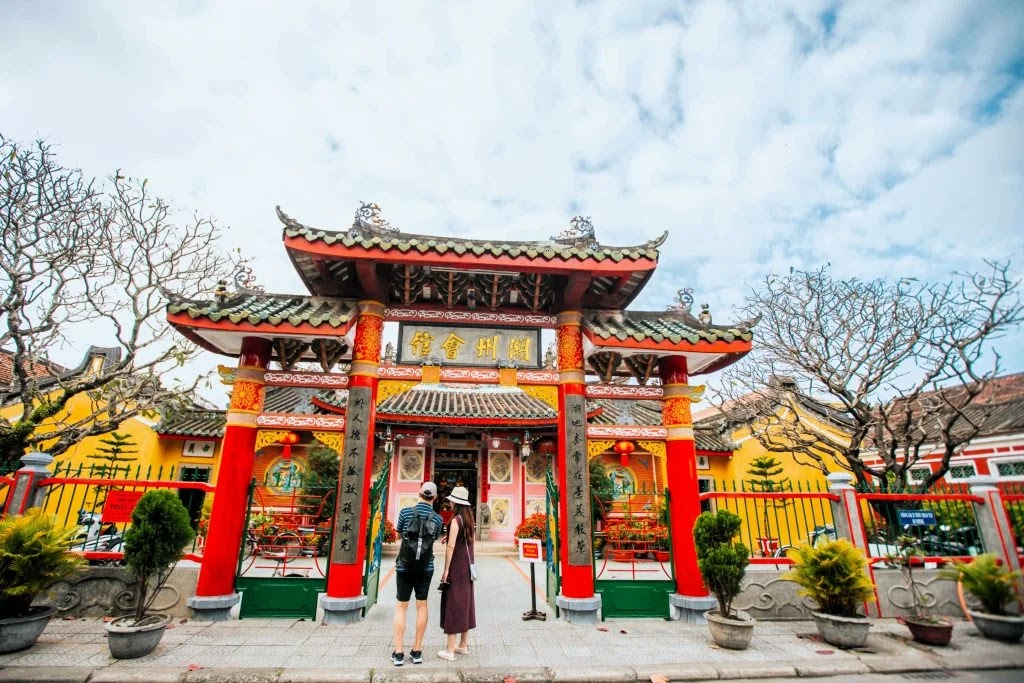
For those who appreciate quiet charm and peerless carpentry, the Chaozhou Assembly Hall (also known as Ong Bon Pagoda) is an unmissable stop. Most of its structural timbers, altars, and ceramic tiles were prefabricated and shipped directly from China to Hoi An.
Highlights:
-
Exquisite Woodcarving Art: The structural rafters, brackets, and altar screens showcase breathtaking high-relief and openwork carvings depicting waves, dragons, the four sacred animals, and vignettes of everyday trade life.
-
Stained Glass & Scholar Screens: Decorated screens depicting the “Four Gentlemen” (Plum blossom, Orchid, Bamboo, Chrysanthemum) paired with antique tinted glass panels.
-
Deity of Safe Navigation: Dedicated to General Fubo (Ma Yuan), a deity believed to calm ocean storms and protect maritime trade routes.

4. Hainan Assembly Hall (Hội Quán Hải Nam) – A Solemn Memorial of Historic Tragedy

-
Address: 10 Tran Phu Street, Hoi An
-
Established: 1875
Unlike other assembly halls dedicated solely to mythological or patron deities, the Hainan Assembly Hall (known locally as Quynh Phu Assembly Hall) is inextricably linked to a true, poignant historical event during the reign of Emperor Tu Duc.
Highlights:
-
Memorial to the 108 Merchant Martyrs: Dedicated to 108 innocent Hainanese traders wrongly executed in 1851 after being mistaken for pirates by corrupt local officials. After the truth was uncovered, Emperor Tu Duc posthumously exonerated them, bestowed noble titles, and funded the construction of this memorial hall.
-
Gilded Sanctuary & Tranquil Rear Courtyard: Featuring a soft pink façade, painted horse-carriage murals flanking the gateway, intricately gilded wooden shrines, and a serene garden courtyard ideal for contemplative strolls.
5. All-Chinese Assembly Hall (Hội Quán Trung Hoa / Ngũ Bang) – The United Community Center
-
Address: 64 Tran Phu Street, Hoi An
-
Established: 1741
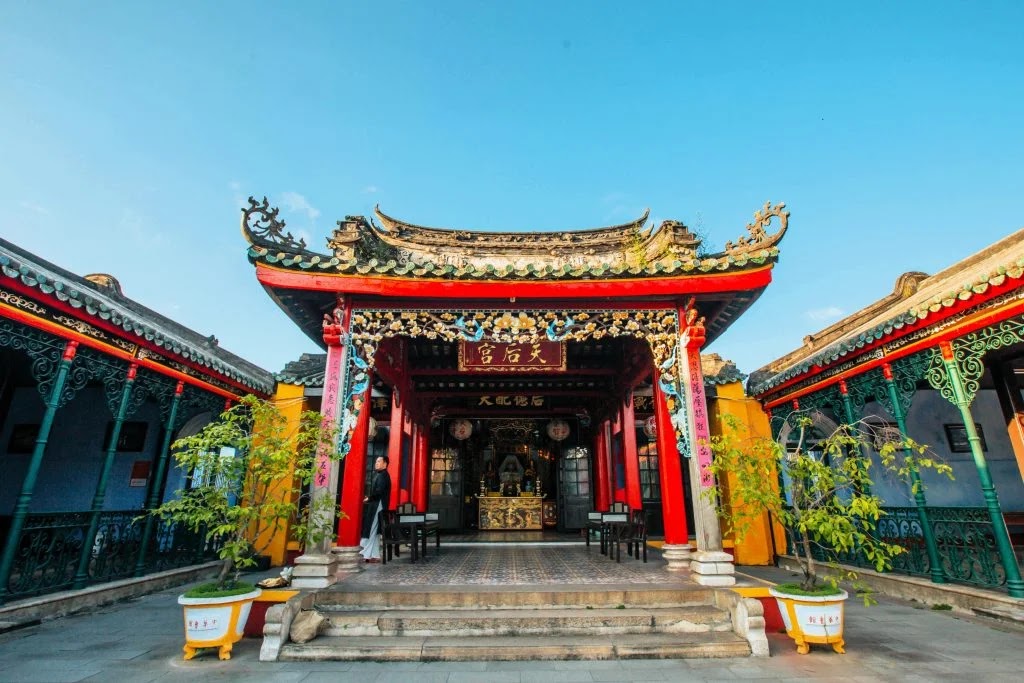
As the second oldest assembly hall built in Hoi An, the All-Chinese Assembly Hall (originally Duong Thuong Hoi Quan or Ngu Bang Assembly Hall) served as the unified civic headquarters supported by all five Chinese dialect groups: Fujian, Guangdong, Chaozhou, Hainan, and Hakka (Jiaying).
Highlights:
-
Striking Royal Blue Walls: Unlike the traditional mustard yellow or terracotta hues prevalent in Hoi An, this assembly hall stands out with its distinctive deep blue interior and exterior walls.
-
Educational & Civic Legacy: Over the centuries, this hall functioned as the Le Nghia School—the first Chinese-language school in Hoi An—as well as a charitable clinic and social relief center. It continues to host cultural and language classes today.
Practical Tips for Visiting Hoi An’s Assembly Halls
-
Entrance Tickets & Pricing:
-
Hoi An Old Town operates under a bundled ticket system (approx. 120,000 VND / international visitor, 80,000 VND / domestic visitor), allowing entry into 5 heritage sites of your choice out of 21 designated sights (including Fujian, Cantonese, and Chaozhou halls).
-
The All-Chinese Assembly Hall and Hainan Assembly Hall frequently allow visitors to admire their courtyards freely.
-
-
Recommended Walking Route:
-
West to East Route: Start at Cantonese Assembly Hall (near the Japanese Bridge) $\rightarrow$ walk down Tran Phu Street to All-Chinese Assembly Hall $\rightarrow$ Fujian Assembly Hall $\rightarrow$ Hainan Assembly Hall $\rightarrow$ end at Chaozhou Assembly Hall (near Hoi An Central Market).
-
Best Times to Visit: Early morning (07:30 – 09:30 AM) or late afternoon (03:30 – 05:00 PM) for softer natural light, fewer tour groups, and pleasant temperatures.
-
-
Dress Code & Etiquette:
-
These are active sacred and ancestral shrines: please dress respectfully (shoulders and knees covered).
-
Maintain a calm, quiet demeanor and avoid using direct flash photography inside the main altar halls.
-
Conclusion
Each assembly hall in Hoi An represents a unique chapter in the town’s golden maritime history, reflecting distinct regional craftsmanship, devotion, and community solidarity. Taking time to explore all five will provide you with a profound appreciation of Hoi An’s rich multicultural tapestry.