
Train Street Hanoi is a narrow, unassuming alley in the heart of Vietnam’s capital, where daily life unfolds just inches from a live railway track. For photographers, this strip of track is a magnet, a place where the ordinary becomes extraordinary the moment a train barrels through the corridor of homes and cafes. This guide walks you through the best Train Street photo spots, practical safety tips, and the techniques you need to capture this unique slice of urban photography Hanoi is famous for.
Why Train Street Is a Photographer’s Paradise
There is a raw, electric energy on Train Street that you simply cannot find in a studio or a museum. The track cuts through a residential neighborhood, with buildings on either side so close you could almost touch them from the train window. This creates a natural frame for your shots, a forced perspective that draws the eye straight down the iron lines. The peeling paint, the tangled electrical wires, the potted plants perched on window ledges, and the everyday lives of the people who live there all combine into a rich tapestry of Hanoi street photography.

What makes this spot so compelling for urban photography Hanoi is the juxtaposition of the static and the dynamic. The locals sit calmly, sipping coffee, reading, or fixing a motorbike, seemingly indifferent to the massive steel beast that thunders past several times a day. Capturing that contrast, the calm before the storm, is what separates a simple snapshot from a powerful story.
Best Train Street Photo Spots and When to Go
Train Street isn’t one single location but a stretch of track that runs through several neighborhoods. The most famous and accessible section for visitors is on Đường Trần Phú and the adjacent alley near Đường Lê Duẩn, close to the Old Quarter. The best spots are where the track curves slightly, giving you a sense of the train’s approach long before it arrives.
The Classic Curve
Look for a gentle bend in the track. This is the holy grail of Train Street photo spots. A curve allows you to show the train coming towards you, its headlight cutting through the scene, and the track leading the viewer’s eye into the frame. Position yourself on the inside of the curve for a more dramatic perspective, or on the outside to capture the train as it passes, appearing to graze the walls.
The Cafe Balconies
Many cafes along the track have balconies or upper-floor windows that offer a bird’s-eye view. Shooting from above gives you a completely different composition, looking down on the train as it threads the needle between the buildings. This is also a safer vantage point, and you can enjoy a cold Vietnamese coffee while you wait for the next train.
Timing Your Visit
Trains run roughly four times a day, but the schedule can change. Ask your hotel to confirm the current times, or check with the local cafes. The most atmospheric time for photography is often the late afternoon, when the golden light filters down the narrow gap between the buildings, casting long shadows and warming up the scene. However, any time of day offers unique character, from the hazy morning light to the dramatic contrast of mid-day sun.
Essential Tips for a Successful Shoot
Capturing great photos at Train Street requires more than just showing up with a camera. Here are some practical tips to help you get the best shots while staying safe and respecting the community.
Safety First, Always
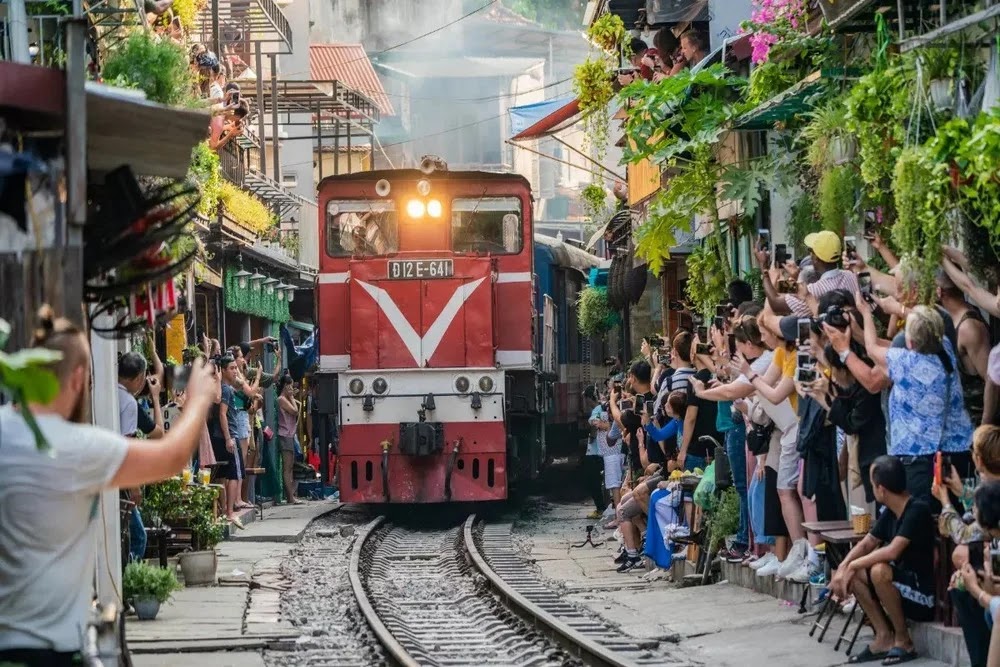
The number one rule for Train Street Vietnam tips is to respect the train. When you hear the horn, get off the track immediately. The train moves faster than it looks, and it cannot stop. Do not put your tripod on the rails, and never pose for a photo on the track when a train is due. The locals are used to the schedule, but you are not. Listen to their warnings and follow their lead.


Camera Settings for the Action
To freeze the motion of the train, use a fast shutter speed, at least 1/500th of a second. Set your aperture to around f/5.6 to f/8 to ensure the entire train and the surrounding buildings are in focus. For a creative motion blur effect, lower your shutter speed to 1/30th or slower and pan the camera with the train. This technique takes practice, but the results can be stunning, conveying the speed and energy of the moment.
Composition and Perspective
Don’t just shoot from the same eye-level position as everyone else. Experiment with different angles. Get low to the ground to emphasize the rails and the height of the buildings. Look for reflections in puddles or shop windows. Use the lines of the track, the overhead wires, and the architecture to create strong leading lines. A good Hanoi street photography guide will always tell you to look for the unexpected, the small detail that tells a bigger story.
Beyond the Train, Capturing the Life of the Street
While the train is the main event, the real soul of Train Street is the life that happens between the trains. This is where your urban photography Hanoi skills truly come into play. Spend time observing the residents. A grandmother hanging laundry, a child playing with a toy, a barber giving a haircut on the sidewalk, the intricate web of motorbikes parked along the walls. These are the moments that make Hanoi unique.
Engage with the locals. A smile and a respectful gesture go a long way. Many residents are used to photographers, and some are happy to pose for a small purchase from their cafe or shop. Always ask permission before taking a close-up portrait. This not only shows respect but often leads to more natural and meaningful photographs.
Practical Information for Your Visit
Before you head out, here are a few final pieces of advice to ensure your trip to Train Street is smooth and rewarding.
Getting There
Train Street is within walking distance of the Old Quarter. A taxi or ride-hailing app like Grab will also get you there easily. Just tell the driver “Đường Trần Phú” or “Phố đi bộ đường tàu” (which means train street). Your hotel can also provide directions.
What to Bring
Bring your camera with a versatile lens, ideally a wide-angle or standard zoom. A small tripod can be useful for low-light shots or long exposures, but be mindful of space. Dress comfortably, wear closed-toe shoes, and be prepared for the heat and humidity. Most importantly, bring patience and a sense of adventure.
Preserving the Magic of Train Street
In recent years, the popularity of Train Street has led to increased scrutiny from authorities, and at times, sections have been closed to visitors for safety reasons. This is a reminder that this is not a theme park, but a living neighborhood. As a photographer, you have a responsibility to help preserve this unique place. Follow the rules, respect the residents, and avoid blocking the track or entrances. By being a responsible visitor, you help ensure that Train Street remains a source of incredible photography for years to come.
Train Street is more than just a photo opportunity; it is an experience that will stay with you long after you’ve edited your images. The combination of raw urban life, the thrill of the approaching train, and the warmth of the local community creates an unforgettable atmosphere. Whether you are a seasoned professional or a casual enthusiast with a smartphone, the Train Street Hanoi offers a chance to capture something truly special. So, pack your camera, head to the tracks, and get ready to freeze a moment of pure Hanoi magic.