Standing at the heart of District 1, the Notre-Dame Cathedral Saigon is more than just a place of worship. It is a silent witness to Ho Chi Minh City’s dramatic past, a stunning example of French colonial architecture Vietnam proudly showcases, and a must-see stop on any travel guide Saigon Cathedral itinerary. Before you even reach its red brick facade, you can feel its presence, a piece of 19th-century Europe transplanted into the tropical energy of Vietnam’s largest city.
A Brief History of the Saigon Cathedral
The story of the Notre Dame Cathedral Basilica Saigon begins in the late 1870s, a time when the French were heavily investing in their colony of Cochinchina. The original wooden church on the site was deemed too modest for the growing European population. So, the colonial administration commissioned a grander structure, one that would assert French power and cultural dominance. Architect Jules Bourard designed the building, and construction took place between 1877 and 1880.
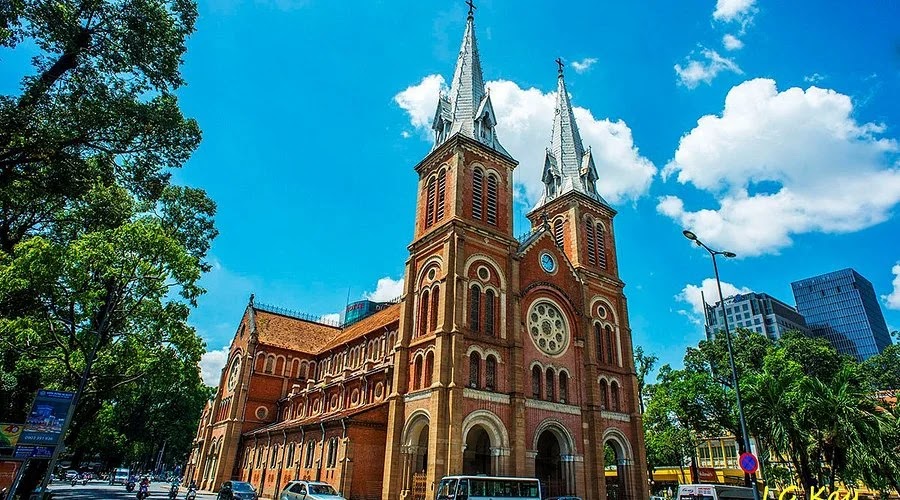
All the materials for the cathedral were imported directly from France, a fact that adds to its historical significance. The distinctive red bricks, for instance, came from Toulouse. They were shipped across the ocean and have remarkably retained their vibrant color for over a century, defying the tropical climate and pollution. The name “Notre-Dame” was officially given in 1959, after the arrival of the statue of the Virgin Mary. Before that, locals simply called it the Saigon Cathedral, a name many still use today.
This cathedral has stood through colonial rule, two devastating wars, and the rapid modernization of the city. It is one of the most important Ho Chi Minh City landmarks, not just for its architecture but for its role as a gathering place for the Catholic community and a symbol of resilience for the entire city.
Architectural Marvels and French Colonial Details
When you approach the cathedral, the first thing you notice is its Neo-Romanesque style, complete with two impressive bell towers that rise to a height of 58 meters. Looking up, you’ll see the twin towers are topped with spires, making them a dominant feature of the city skyline, even among the modern skyscrapers nearby. The symmetry is perfect, with a central clock that has been keeping time for the city since 1880.
Take a moment to walk around the entire perimeter. The exterior is a masterclass in French colonial buildings Ho Chi Minh City has to offer. Look closely at the intricate carvings, the ornate rose window above the main entrance, and the way the Romanesque arches and Gothic elements blend seamlessly together. The cathedral’s facade was cleaned and restored in recent years, making it look almost as good as it did on its opening day.
Inside the Cathedral
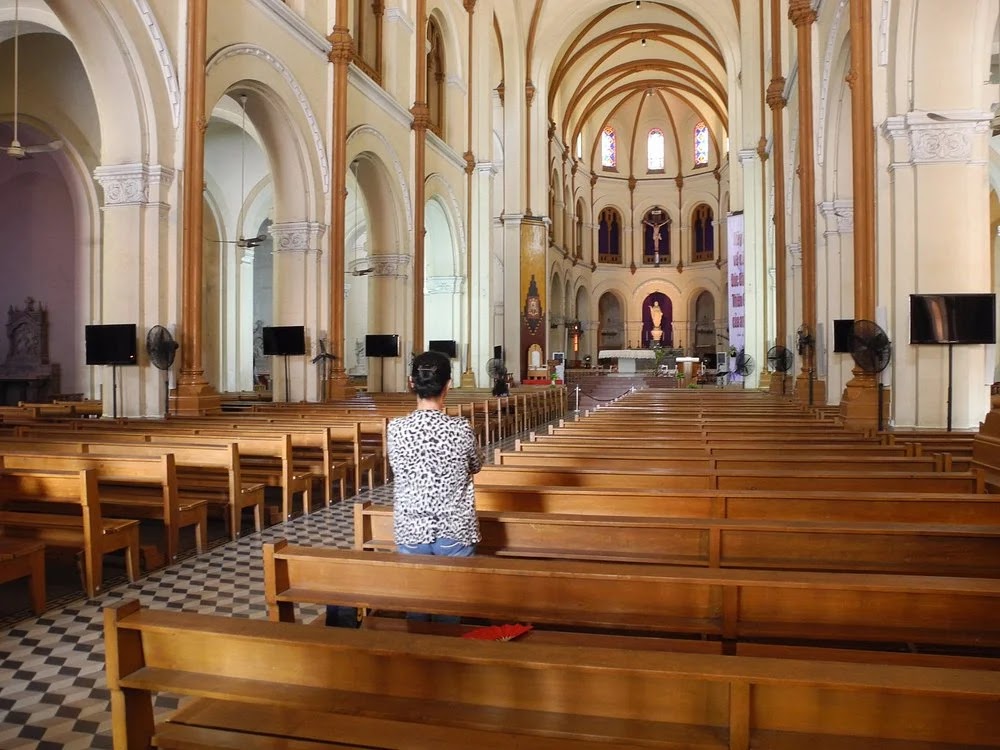
While the exterior is impressive, stepping inside offers a different kind of peace. The vast, open interior is cool and quiet, a welcome escape from the city’s heat and noise. Sunlight streams through the stained-glass windows, casting colorful patterns on the tiled floor. The high vaulted ceilings and rows of wooden pews create a sense of awe and reverence. Visitors are welcome to sit and observe, but remember to be respectful of those who are there to pray. Photography is allowed, but flash photography is usually discouraged to preserve the atmosphere.
The Famous Statue and the Peaceful Park
In front of the cathedral is a small, well-manicured park where you’ll find a bronze statue of the Virgin Mary holding a globe. This statue was added in 1959 and has become an iconic image in its own right. The park is a popular meeting point for locals and a great spot to take photos. On weekends, the area transforms into a pedestrian zone, and the streets around the cathedral become lively with street performers, food stalls, and families enjoying the evening air.


This area, often referred to as the city’s “Western Quarter” during colonial times, is now a perfect starting point for exploring other nearby attractions. The Central Post Office, another gem of French colonial architecture Vietnam is just a short walk away. With its green shutters and arched windows, it makes for a beautiful photo opportunity alongside the cathedral. The two buildings together form a stunning architectural pair that you will see on countless postcards.
Practical Information for Your Visit
Planning your visit to the Notre-Dame Cathedral Saigon is easy, but a few tips can make your experience much better. Here is a quick look at what to expect:
- Location: 1 Công xã Paris, Bến Nghé, Quận 1, Ho Chi Minh City. It is conveniently located in the city center.
- Getting There: The cathedral is a short walk from the Saigon Central Post Office and the Saigon Opera House. A taxi or ride-hailing app like Grab will easily drop you off at the main entrance.
- Best Time to Visit: Early morning (before 8 AM) is ideal for photos with fewer crowds and softer light. The late afternoon also offers beautiful golden light on the red brick facade.
- Mass Times: If you wish to attend a service, there are multiple masses held daily, with some in Vietnamese and one in English on Sunday. Check the schedule at the entrance.
- Dress Code: Since it is a functioning religious site, dress modestly. Cover your shoulders and knees. It is a sign of respect and will be appreciated by the staff and worshippers.
- What to Bring: A bottle of water, sunscreen, and a hat, as the sun can be intense in the open plaza.
Why This Landmark Matters
In a city that is constantly reinventing itself, with new skyscrapers and shopping malls appearing every year, the Notre-Dame Cathedral Saigon stands as a constant. It is a beautiful and poignant reminder of the city’s complex history. For a first-time visitor, it offers a moment of calm and beauty. For returning travelers, it feels like meeting an old friend who has watched the city change over the years.
Visiting this cathedral is not just about ticking off a box on your list of Ho Chi Minh City landmarks. It is about connecting with the soul of the city. You can feel the history in the thick walls, and you can see the future in the modern buildings that surround it. It is the perfect place to pause, reflect, and appreciate the layers of culture that make Saigon so unique.
So, when you are planning your trip to this vibrant city, make sure to set aside an hour to wander around the Notre-Dame Cathedral Saigon. Sit on a bench in the park, watch the locals, and soak in the atmosphere. Then, cross the street to the Central Post Office, and continue your journey through the beautiful French colonial buildings Ho Chi Minh City has to offer. It is an experience you will not soon forget.
Start your exploration of Saigon’s rich heritage today. Add the Notre-Dame Cathedral to your itinerary and discover why this magnificent structure remains the most beloved symbol of the city’s enduring charm.