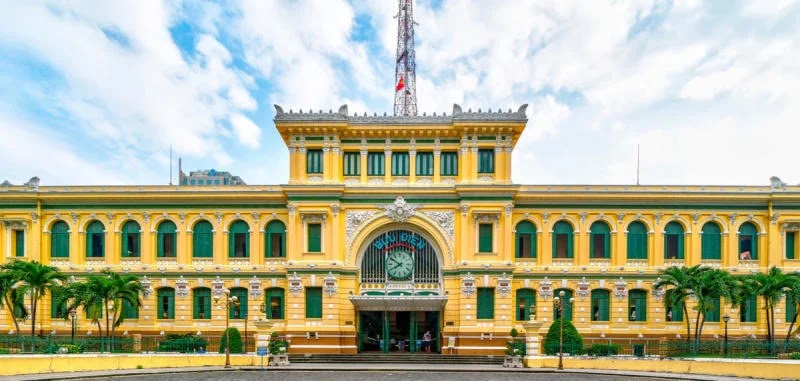
Standing at the entrance of the Saigon Central Post Office, you might feel like you’ve stepped back in time. The grand yellow facade, the arched windows, and the old-fashioned clock above the main entrance all whisper stories of a bygone era. This isn’t just a place to send a postcard; it’s a living museum and a testament to Ho Chi Minh City’s rich colonial past. For any traveler keen on Ho Chi Minh City colonial architecture, this building is an essential stop. Let’s walk through its history, marvel at its design, and uncover why it remains one of the most beloved Ho Chi Minh City architectural landmarks.
The History Behind the Grand Facade
The story of the Saigon Central Post Office begins in the late 19th century when Vietnam was part of French Indochina. The French were not just about commerce and governance; they were also determined to leave a permanent architectural stamp on their colonies. The post office, constructed between 1886 and 1891, was a key piece in this grand plan. It was designed by Alfred Foulhoux, a French architect who drew inspiration from European styles, blending them with local elements to create something uniquely Saigon.
Interestingly, many visitors assume it was designed by Gustave Eiffel, the mastermind behind the Eiffel Tower and the Statue of Liberty. While the famous architect did design several other structures in Vietnam, like the nearby Saigon River Tunnel’s predecessor, the Long Bien Bridge in Hanoi, the post office is not his work. The confusion likely stems from the building’s impressive iron framework, which is reminiscent of Eiffel’s style, but the credit goes to Foulhoux.
When it first opened, this was more than just a post office. It was a symbol of French technological and administrative power. It housed telegraph offices, telephone exchanges, and was the central hub for all communication in the region. Locals and foreigners alike would come here to send telegrams, make phone calls, and, of course, mail letters. Over the decades, it has witnessed countless historical events, from the colonial era through the Vietnam War, and into the modern day, all while retaining its original function and charm.
Architectural Marvels You Cannot Miss
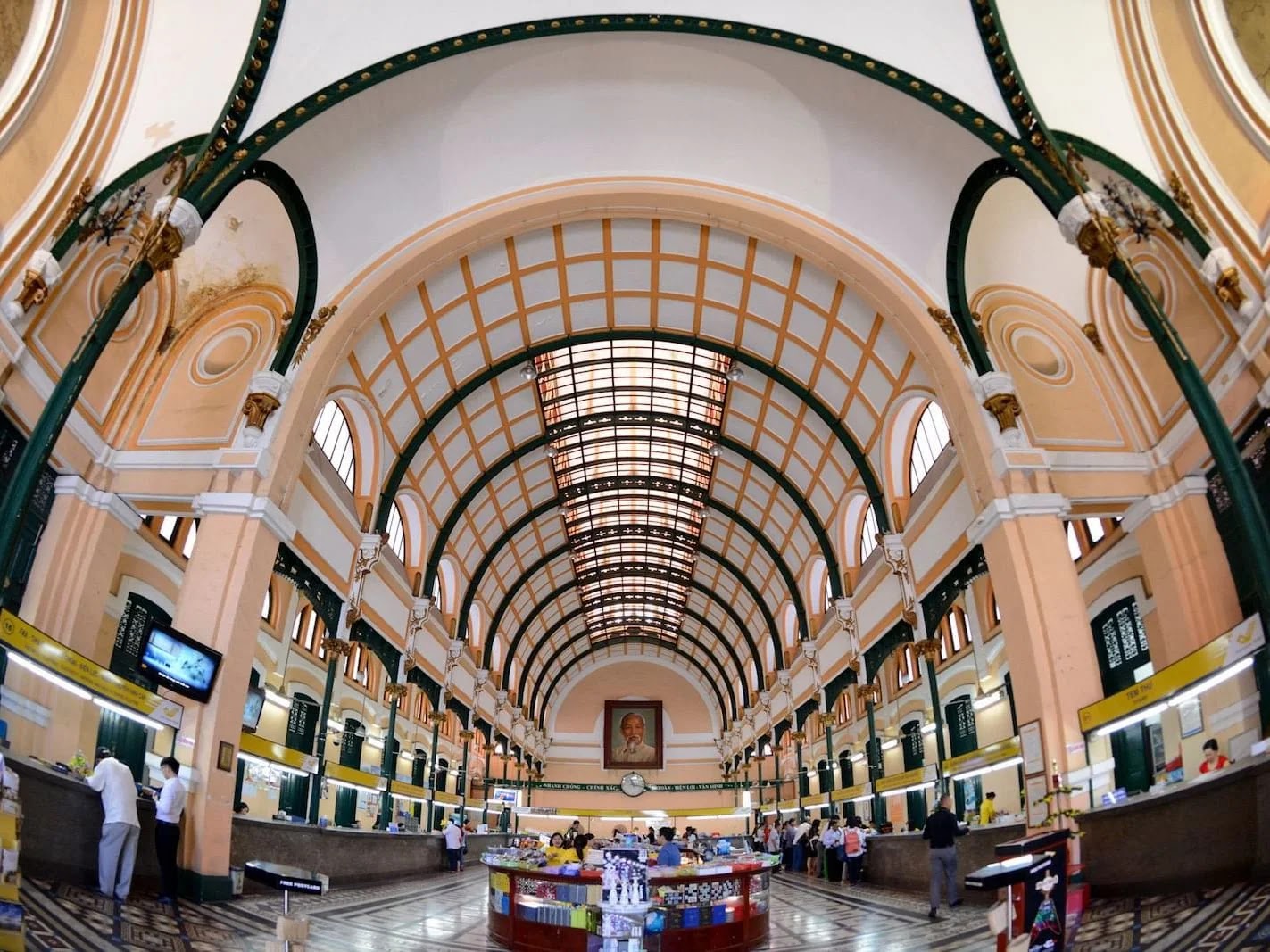
Step inside, and you’ll be immediately struck by the cavernous, airy interior. The first thing you’ll notice is the massive, curved iron roof that arches over the main hall. This is not just a structural feat; it’s a visual spectacle. The intricate latticework of the steel beams is painted a soft green, which contrasts beautifully with the warm yellow walls. This design allows for plenty of natural light to flood the space, making the post office feel bright and welcoming even on a rainy Saigon afternoon.
One of the most iconic features is the giant clock face that hangs directly above the main entrance. It’s been keeping time for over a century and is a favorite photo spot for tourists. But don’t just look up; look around. The floor is a beautiful mosaic of ceramic tiles, laid out in geometric patterns that have been polished by millions of footsteps over the years. The walls are lined with vintage telephone booths, which are now mostly decorative but add to the nostalgic atmosphere.
Perhaps the most surprising element is the two historical maps that grace the walls. One depicts Southern Vietnam and the other shows the city of Saigon as it was in 1892. These maps are not just decorative; they offer a fascinating glimpse into how the city has transformed over the past century. Take a moment to study them and see if you can spot landmarks that still exist today. These details make the Saigon Central Post Office tour far more than just a quick photo stop.
More Than Just a Post Office
While the architecture is the star of the show, the post office is still a fully functional public service. You’ll see locals mailing letters, paying bills, and sending packages. This blend of daily life and historical preservation is part of what makes the place so special. For tourists, it’s a chance to send a postcard home that bears a special postmark from Saigon. Many visitors take advantage of this, adding a personal touch to their travel memories.

Inside, you’ll also find several souvenir stalls. These aren’t your typical tourist traps; they offer a range of items, from traditional Vietnamese lacquerware and conical hats to postcards and stationery. It’s a great place to pick up a unique memento or a gift for someone back home. The sellers are generally friendly and can help you choose something special.

You’ll also notice a few ATM machines and a small currency exchange counter, which can be handy if you need cash or want to exchange some money. But the real charm lies in the details. Take a look at the wooden counters that have been worn smooth by time. Admire the old-style metal grilles and the vintage postal boxes. Every corner of this building has a story to tell.
Planning Your Visit
Visiting the post office is easy, and it’s perfectly situated to be part of a larger walking tour. It’s located right across the street from the famous Notre-Dame Cathedral Basilica of Saigon, another prime example of French colonial buildings Saigon has to offer. The two sites together form the heart of the city’s colonial quarter. You can easily spend an hour exploring both.
The post office is open daily from 7:00 AM to 7:00 PM, and it’s free to enter. The best time to visit is in the late morning or early afternoon when the light streams in beautifully through the windows. However, be prepared for crowds, especially during peak tourist season. If you want to avoid the busiest times, try going on a weekday or early in the morning right when it opens. You’ll have more space to take photos and soak in the atmosphere.
Tips for a Memorable Visit
- Bring your camera: The architecture is incredibly photogenic, from the arched ceilings to the intricate floor tiles.
- Send a postcard: It’s a fun and inexpensive way to connect with the building’s purpose and share your journey with loved ones.
- Look up and down: Don’t just focus on eye level. The ceiling, the maps, and the floor are all part of the experience.
- Combine with nearby attractions: Plan to visit the cathedral, the Reunification Palace, and the War Remnants Museum on the same day, as they are all within walking distance.
- Be respectful: Remember that this is a functioning post office. Keep noise levels down and be mindful of people who are there to conduct business.
- Take a guided tour: To fully appreciate the history and architectural details, consider joining a colonial architecture tour Vietnam that includes the post office and other French colonial buildings in the city. Local guides can share stories and insights that you won’t find in guidebooks.
The Post Office in the Modern City
In a city that is rapidly modernizing, the Saigon Central Post Office stands as a proud reminder of a complex history. It’s managed to remain relevant, not just as a historical monument but as a vibrant part of the community. The juxtaposition of old and new is striking. You might see a monk in traditional robes using his smartphone next to a backpacker writing a letter. This is the magic of Saigon, and the post office is a microcosm of that spirit.
For those interested in Ho Chi Minh City colonial architecture, this building is a must-see. It’s one of the best-preserved examples of French colonial design in the country. The blend of European neoclassical and Gothic styles with a tropical adaptation creates a unique aesthetic that you won’t find anywhere else in the world. It’s not just a building; it’s a piece of living history.
As you stand under that grand arched ceiling, listening to the echo of footsteps and the murmur of conversations in many languages, you’ll understand why this is more than just a post office. It’s a gateway to understanding Vietnam’s past and a symbol of its enduring resilience. Whether you’re a history buff, an architecture enthusiast, or simply a curious traveler, the Saigon Central Post Office is a destination that will leave a lasting impression.
Final Thoughts on Your Colonial Journey
The Saigon Central Post Office is a highlight of any trip to Ho Chi Minh City. It’s a place where history, architecture, and daily life converge in a beautiful and accessible way. It’s one of the easiest and most rewarding stops on any Ho Chi Minh City architectural landmarks itinerary. So when you’re planning your days in this vibrant city, make sure to carve out some time to step inside this iconic yellow building. You’ll walk out with a deeper appreciation for the layers of history that make Saigon so fascinating.
Ready to explore more of Saigon’s colonial charm? Start your journey at the post office, then cross the street to the cathedral, and let the city’s history unfold before you. Don’t forget to bring your camera and your sense of wonder. The stories etched into these walls are waiting for you to discover them.