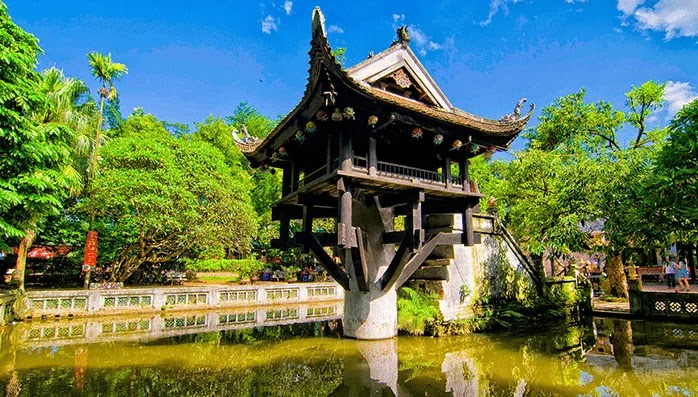
Standing on a single stone pillar in the middle of a lotus pond, the One Pillar Pagoda is one of Hanoi’s most iconic and unusual Buddhist sites. Its history is steeped in royal legend and imperial dreams, making it a must-visit for anyone interested in Vietnam’s cultural heritage. This guide unpacks the One Pillar Pagoda history, the legend of Emperor Ly Thai Tong, and everything you need to know for a meaningful visit.
The Legend Behind the One Pillar Pagoda
The story begins in the 11th century with Emperor Ly Thai Tong, the second ruler of the Ly dynasty. According to the Hanoi pagoda legend, the emperor was childless and desperately prayed for an heir. One night, he dreamt that the bodhisattva Quan Am (Avalokitesvara) appeared to him, seated on a lotus blossom, and handed him a male child. Not long after, the queen gave birth to a prince. Grateful for this divine intervention, the emperor ordered the construction of a temple in 1049, designed to resemble the lotus throne from his dream.
A Dream Fulfilled in Wood and Stone
The original structure was built entirely of wood, perched atop a single stone pillar rising from a small pond. The pillar symbolized the stem of a lotus flower, and the temple itself represented the blossom. This design was not just architectural whimsy; it carried deep spiritual meaning. In Buddhism, the lotus symbolizes purity and enlightenment, rising from muddy water to bloom untainted. The emperor wanted a place where he could offer daily prayers of gratitude to Quan Am, and the temple became a personal sanctuary for the royal family.
One Pillar Pagoda Architecture and Symbolism
The current One Pillar Pagoda architecture is a careful reconstruction, as the original was destroyed by French colonial forces in 1954. However, the rebuild faithfully mirrors the ancient design. The pagoda is a small square structure, about three meters on each side, with a tiled roof that curves gracefully at the edges. A single stone pillar, about 1.25 meters in diameter, supports the entire wooden superstructure. The pond around it is filled with lotus plants, and a small bridge leads to the entrance.
Every element of the pagoda has symbolic meaning. The square shape represents the earth, while the round pillar represents the heavens. The lotus petals carved into the base and roof echo the flower from the emperor’s dream. Visitors often remark on the pagoda’s delicate beauty, which contrasts with the bustling city around it. The site is not just a tourist attraction; it is still an active place of worship, and you will often see locals lighting incense and saying prayers.
The Lotus Pagoda Vietnam Connection
In Vietnamese, the pagoda is called Chua Mot Cot, which literally means “pagoda of one pillar.” However, its nickname, the Lotus Pagoda Vietnam, captures its essence more poetically. The lotus is Vietnam’s national flower, and the pagoda’s design is a tribute to this beloved symbol. For many Vietnamese, the pagoda represents resilience and spiritual purity, values that have sustained the nation through centuries of change.
Visiting the One Pillar Pagoda Today
If you are planning a trip to Hanoi, the One Pillar Pagoda should be high on your list. It is located within the grounds of the Ho Chi Minh Museum complex, near the Ho Chi Minh Mausoleum. This makes it easy to combine a visit with other major attractions. Here is a practical One Pillar Pagoda travel guide to help you make the most of your time.
Location and How to Get There
The pagoda is at Ong Ich Khiem Street, Ba Dinh District, Hanoi. You can easily reach it by taxi, ride-hailing app, or even on foot if you are staying in the city center. The nearest landmarks are the Ho Chi Minh Mausoleum and the Presidential Palace. Many guided city tours include the pagoda as a stop, but you can also explore independently.
Opening Hours and Best Time to Visit
The pagoda is open daily from around 7:00 AM to 6:00 PM, but hours can vary on holidays. To avoid crowds and the midday heat, arrive early in the morning. The soft morning light also makes for beautiful photographs, with the golden roof reflecting on the pond. Weekdays are generally quieter than weekends, when domestic tourists flock to the site.

What to Expect Inside
As you approach, you will cross a small stone bridge to the entrance. Inside, the space is intimate and serene. A statue of Quan Am sits on a lotus throne, and incense smoke curls upward in the dim light. You may notice offerings of flowers and fruit left by devotees. Remember to dress respectfully, covering your shoulders and knees, and speak softly to preserve the contemplative atmosphere.
Buddhist Relics Hanoi and Cultural Significance
While the One Pillar Pagoda itself is small, it is part of a larger network of Buddhist relics Hanoi has to offer. The pagoda is considered one of the most important Buddhist relics in the city, not only for its architectural uniqueness but also for its historical and spiritual weight. It has been recognized as a National Historic and Cultural Monument, and in 2012, it was listed in the Guinness Book of Records as the “Most Unique Pagoda in Asia” due to its distinctive design.
The pagoda has undergone several restorations over the centuries, each time preserving the original intent. The current pillar is made of concrete, a replacement for the original wooden one, but the spirit of the site remains unchanged. For those interested in Vietnamese Buddhism, the pagoda offers a glimpse into the royal patronage that shaped religious life in ancient Hanoi.
Combining Your Visit with Other Cultural Sites
To deepen your understanding of Hanoi’s Buddhist heritage, consider visiting other nearby sites. The Tran Quoc Pagoda, located on West Lake, is the oldest Buddhist temple in the city and offers a stark contrast to the One Pillar Pagoda’s compact design. The Temple of Literature, dedicated to Confucius, is also within walking distance and provides further insight into Vietnam’s spiritual and intellectual history. Together, these sites paint a rich picture of Hanoi’s cultural tapestry.
Practical Tips for a Memorable Visit
Here are some quick tips to ensure a smooth and respectful visit to the One Pillar Pagoda:
- Dress modestly. This is an active religious site, so avoid shorts, tank tops, and revealing clothing.
- Bring incense. You can buy small bundles at the entrance to make an offering, a gesture that locals appreciate.
- Keep your voice low. The pagoda is a place for meditation and prayer, so maintain a quiet demeanor.
- Combine with nearby attractions. Plan to visit the Ho Chi Minh Mausoleum, the Presidential Palace, and the One Pillar Pagoda in the same morning to maximize your time.
- Use a guide. Hiring a local guide or joining a tour will enrich your experience with stories and details you might otherwise miss.
The Enduring Legacy of the One Pillar Pagoda
Despite its small size, the One Pillar Pagoda carries an outsized legacy. It is a testament to the power of faith, the vision of a ruler, and the artistic genius of ancient Vietnamese craftsmen. The Emperor Ly Thai Tong story is one of hope and divine blessing, and the pagoda stands as a physical reminder that dreams can take root and flourish, much like a lotus in a muddy pond.
For modern travelers, the pagoda offers a peaceful pause in the midst of Hanoi’s chaotic energy. It invites you to reflect, not only on Vietnam’s storied past but also on your own journey. Whether you are a history buff, a spiritual seeker, or simply a curious traveler, the One Pillar Pagoda will leave a lasting impression.
So, on your next trip to Hanoi, take a moment to walk across that small bridge, light an incense stick, and stand where emperors once stood. The One Pillar Pagoda history is waiting to be discovered, and it may just inspire a dream or two of your own.